What the Left Needs Is Not Mamdani, It’s Edi Rama


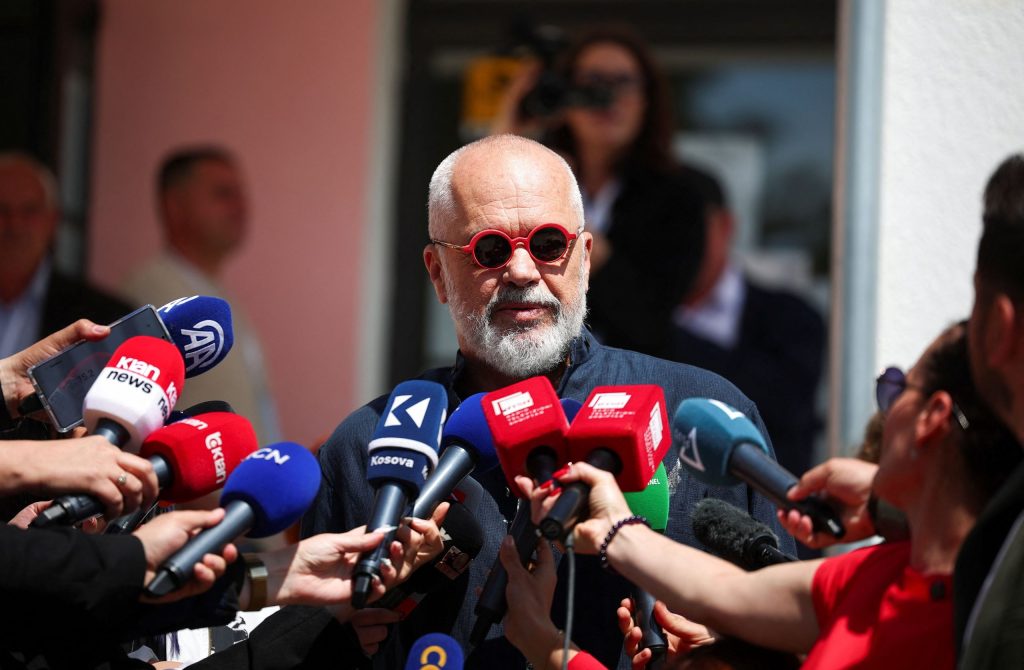
Edi Rama, Albania’s longtime prime minister and one of the most unconventional figures in the Balkanosphere, offers progressives a lesson they’ve long resisted: politics is theater, whether you like it or not.

Rama doesn’t posture as a holier-than-thou type standing above the fray.
He embraces the spectacle, crafting a persona that is bold, unpredictable, and visually unforgettable.

He understands that modern leadership demands more than correct positions—it requires presence, sensation, and the ability to command attention in a media ecosystem built for distraction.

Progressives searching for a model of how to do that should look far beyond Manhattan and take notes.


Edi Rama is a prime minister who greets foreign leaders with theatrical flair, wears bright sneakers to formal meetings, and even appoints an AI system to a cabinet position just to shake up the political establishment.

He once welcomed Italy’s Prime Minister Meloni by kneeling like an old-world gentleman, transforming a routine diplomatic moment into a global headline.

He’s posed nude on a beach in southern France, delighted (and scandalized) the press with his visual eccentricities, and shown that political spectacle, when wielded deliberately, can amplify rather than cheapen leadership.

Rama knows how to build moments—and how to make them stick.


He also doesn’t shy away from drama.
He uses confrontation the way an actor uses tension—just enough to hijack the scene without breaking the fourth wall.

During a livestream after the arrest of Tirana’s mayor, a political ally, Rama lost his temper, slammed his fist on the table, furious and unapologetic.

It was political theater, yes, but theater that reinforced his authority rather than distracting from it.


But Rama’s theatrics are not a substitute for governance—they are the entry point to it.

He took Albania, long viewed as traditional and insular, and brought it to the doorstep of European integration.

He advanced progressive reforms, transformed Tirana into a vibrant capital, and fueled a tourism boom that reshaped the country’s global image.

He also refuses to play the purity games that dominate modern identity politics.

When he casually calls himself “a Muslim leader” despite being Catholic, it’s less a contradiction than a wink—his way of signaling that identity can be handled with light-hearted humor rather than defensiveness.

Obviously, he is far from perfect, but he is a politician who gets things done—and gets his people to come along.


Now consider Mamdani.
His victory in New York is notable, especially in a city still marked by the memory of 9/11.

But that win occurred in one of the bluest cities in the country, where the left enjoys an overwhelming advantage.

He faced unusually weak opponents, benefited from a fractured field, and yet still managed to antagonize the city’s Jewish community—a core Democratic constituency—at a moment when any viable coalition-builder would have moved in the opposite direction.

His win says more about New York’s political terrain than about a model progressives can export elsewhere.


And Mamdani’s limitations become clearer when you look at his style.

His contrarian rhetoric lands well with loyalists but falls flat once it leaves friendly rooms.

His ideology may excite some on the left, but does it have enough appeal among moderates, independents, or anyone outside the progressive bubble?

And it’s worth remembering: in the same 2025 election cycle, Democrats who won competitive races like New Jersey and Virginia did so by appealing to those in the middle—not by lecturing them.

Mamdani’s approach simply lacks that range.


In the end, progressives don’t need better preachers; they need better performers.

Leaders who understand the stage they’re standing on, and how to hold it.

So far, the Mamdani model has only shown that it can win in a place where Democrats start fifty points ahead.

And outside New York City, that simply isn’t enough.

Leave a comment