
Los Angeles, CA
“Shahanshah!” — King of Kings — rang out suddenly from a young woman in the audience at USC’s Town & Gown hall. The cry shook the room. For a moment, it felt as though time had bent backwards, carrying the hall full of professors, students, and members of the Iranian diaspora to pre-1979 Iran. Some in the crowd smiled with recognition; Americans were caught off-guard. In Los Angeles, the beating heart of the Iranian diaspora, the Pahlavi family still gets the rock star treatment.
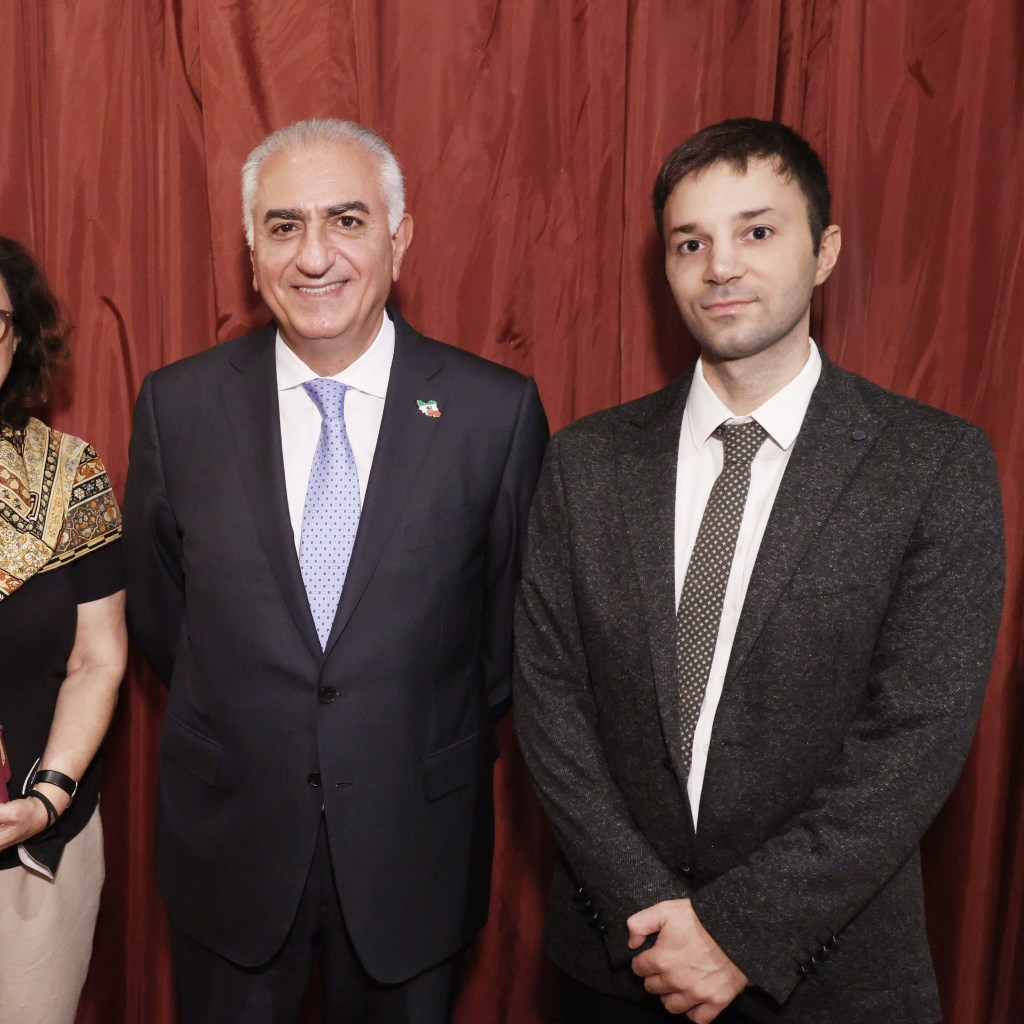
But Crown Prince Reza Pahlavi, who stood waiting in the wings, is not a man to dwell on the past. I had spoken with him briefly backstage before the event. He was warm, approachable, and energetic — the kind of leader who listens as much as he talks, always surrounded by a team yet unmistakably a team player himself. In that casual exchange, I suggested that highlighting his family’s historic connection to Atatürk might resonate with the Turkish public, where the legacy of Atatürk continues to have millions of supporters. He agreed, calling it a good idea, and even told his advisers to take a note.
He went on to tell me at length about how his grandfather, Reza Shah, had once considered establishing a republic before founding the monarchy. The familiar black-and-white images of Reza Shah standing beside Atatürk take on new meaning in his telling: not nostalgia, but potential waiting to be unleashed — with implications that could reshape the region’s future. From there, he pivoted to what he sees as today’s real challenge: religious extremism. With a sharp sense of humor, he joked that today there are more religious extremists in European capitals than in Tehran. Then, more seriously, he reminded me that Iran was the only country in the region where people spontaneously held candlelight vigils after 9/11 — proof, he argued, of the Iranian people’s deeper instincts for liberal values against extremism.
A Prince with a Plan
When Pahlavi stepped onto the stage moments later, the contrast with the cry of Shahanshah could not have been starker. To the enthusiasm of his supporters, he answered with a striking dose of realism: “Let’s first put the cattle before the plow. Let’s first liberate our country.” The line landed. Heads in the hall nodded, applause followed. It was a reminder that his vision is less about restoration than about rebirth — not a return to the past, but the creation of something new.
What became evident during his remarks was how carefully he has thought about governance. Far from a detached figure of exile, Pahlavi spoke like someone who has worked through transition scenarios and developed concrete plans. His air force background lends him a reputation for discipline, but his personality projects something else: confidence paired with openness. On stage, he shook hands, responded earnestly to questions, and carried himself with the ease of someone who knows he must persuade, not command.
Even in speaking of his daughter, he tied personal details into his cause for democracy. He emphasized that Iran’s future belongs to its youth, and that his optimism is grounded in what he learns from the younger generation. In a hall filled with students, that struck a particularly resonant note.
Pahlavi has cultivated friendships in Washington, across Europe, and throughout the diaspora. He has also earned goodwill from groups in the region who are interested in his message of secular democracy. These networks matter. They amplify his voice, give him resources and credibility abroad, and keep his name in circulation. But even his strongest supporters know their limits. To transform Iran, he needs allies not just in Los Angeles or Washington, but in Tehran.
That is the paradox of his position. He commands a stage in the heart of the diaspora, carries a name that still evokes powerful memories, and presents himself as a man ready to govern. Yet until he finds real partners inside Iran, his project will remain suspended between memory and possibility.
Afterthoughts
After the event, I came home reflecting on my encounter with the Crown Prince. My mind drifted to one of the most memorable scenes from the movie The Lion King. Promising to take him to his father, Rafiki leads Simba to a pool of water, urging Simba to look harder into his own reflection. At first, Simba protests: “That’s not my father. That’s just my reflection.” But as the water ripples, his image transforms into that of his father Mufasa, who warns him: “You have forgotten who you are… You are more than what you have become. Remember who you are.” For Simba, the lesson is that the past lives within him, and that identity comes with responsibility. For Pahlavi, that lesson is already clear — what remains to be seen is whether Iranians, too, will find their future in those reflections.
With gratitude to the USC Casden Institute for organizing the event.
 Sinan Kircova
Leave a comment